Rose Quartz
Quartz variety

Rose Quartz

A soft pink quartz, traditionally associated with love, gentleness and warmth.

Hardness 7 May be rinsed in water Protect from direct sunlight Water
In brief

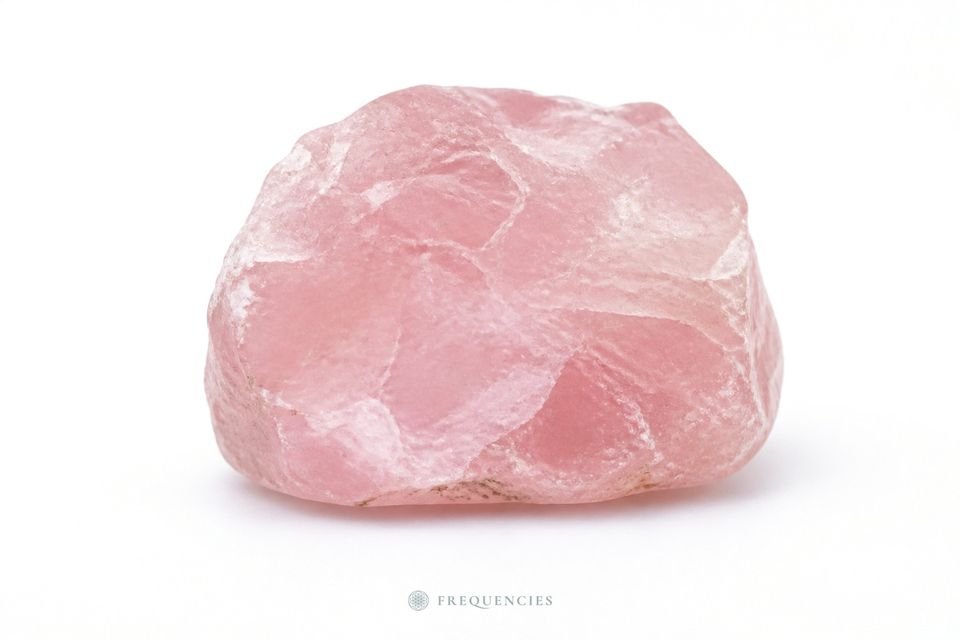
Rose Quartz is a soft pink to milky pink variety of quartz (SiO2) with a hardness of 7 on the Mohs scale. The colour of massive material is produced by microscopic pink fibres similar to dumortierite. It is found in Brazil, Madagascar, Namibia and India. In the crystal community, it is seen as a symbol of love, gentleness and warmth.

Rose Quartz in our shop

Exhibit label

Name
Rose Quartz
Type
Mineral
Mineral group
Quartz group (SiO2)
Hardness
7 on the Mohs scale
Colour
Soft pink to milky pink
Main locality
Brazil
Localities
Brazil, Madagascar, Namibia, India
Planet
Venus (tradition)

Mohs hardness scale

7out of 10

A hard stone: it scratches glass and is durable in everyday wear. Even so, protect it from knocks.

Care

Water

May be rinsed in water

A brief rinse in lukewarm water, then wipe dry.

Sun

Protect from direct sunlight

Sources differ: the GIA regards the colour as stable in light, but other sources report fading. As a precaution, do not keep the stone in direct sunlight for long.

Storage

Durable in everyday wear

Avoid: prolonged direct sunlight, harsh cleaning agents, strong knocks.

Note. Prolonged sunlight can make the tone paler.

In the crystal community, the following are used for cleansing: a brief rinse under running water, the presence of selenite, sound vibrations, moonlight.

From geology to your shelf

  • How it forms. Rose quartz usually forms as massive, irregular masses in hydrothermal veins and pegmatites. Transparent pink crystals with clear faces are much rarer and form in pegmatite cavities at the final stage of crystallisation.
  • Where the colour comes from. The colour of massive rose quartz is linked with microscopic pink fibres resembling the mineral dumortierite; the same fibres also produce the rare six-rayed star effect. The colour of transparent rose quartz is produced by radiation-induced colour centres, and it can fade from heat or light.
  • History. For more than 100 years the pink colour was explained by titanium, manganese and iron, until Caltech researchers published a study in 2001 on the pink fibres that produce this colour. The famous Brazilian rose quartz crystal specimen "La Madona Rosa" was sold at auction in 2013 for more than 550,000 US dollars.
  • How to recognise a genuine stone.
    • Natural rose quartz is usually milky and translucent; a very bright "neon" pink tone and colour concentrated in cracks indicate dyeing.
    • Round bubbles or swirl-like streaks under magnification point to glass.
    • Hardness 7: rose quartz scratches glass, whereas plastic imitations are noticeably lighter and softer.
  • Treatment and imitations. Imitations are dyed quartz, pink glass, plastic and composite stones in which glue seams can be seen.
  • How to choose. The colour of rose quartz is soft, so it is best seen in pieces at least a centimetre thick. Deeper, even pink tones and greater transparency are more valuable, and for star stones the star must be clear, symmetrical and centred.
  • Traditional meaning

    This is crystal tradition and symbolism, not a scientific or medical claim. The chakras, signs and elements match our product pages.

    Chakras

    Heart Chakra

    Rose Quartz is traditionally associated with the heart chakra and warmth.

    Zodiac signs

    ♉︎Taurus♎︎Libra

    In traditional crystal astrology, rose quartz is associated with Taurus and Libra, as well as with people who value warmth and inner balance.

    Element

    Water

    In crystal traditions, the element of water symbolises warm feelings and balance, which the gentle tone of rose quartz recalls.

  • Main symbolism: love and gentleness
  • In crystal traditions it symbolises love, gentleness and conscious work on oneself
  • Traditionally associated with warmth and inner peace
  • In the crystal community, rose quartz is traditionally associated with love and gentleness, which is why it is a popular gift for loved ones, for example at weddings or anniversaries. Many people place it in the bedroom or in the heart corner of the home, and it is often chosen as a first crystal.
  • The traditional meaning of crystals has not been medically proven and does not replace the advice of a professional.

    Stories and legends

    The secret of rose quartz's colour was revealed only at the start of the 21st century.

    Since the 1930s it was believed that the pink colour was produced by rutile or titanium impurities. In 2001, researchers at the California Institute of Technology studied rose quartz from 29 deposits around the world and discovered microscopic fibres similar to the mineral dumortierite. It is these fibres that give massive rose quartz its soft colour.

    Rose quartz almost never forms clear crystals.

    Ordinary rose quartz grows in massive pieces without crystal faces, so it is cut into spheres, figures and beads. Well-formed rose quartz crystals are rare and known only from a few deposits, for example in Minas Gerais in Brazil and at Newry in Maine, USA. Their colour is produced by aluminium and phosphorus colour centres, and unlike massive rose quartz, these crystals can fade in light.

    Rose quartz is the state mineral of South Dakota in the USA.

    Rose quartz was found in South Dakota near the town of Custer in the 1880s. In 1966 it was officially declared the state mineral. It is still mined in the Black Hills and used in jewellery and decorative objects.
    Interesting facts

    • The soft colour of massive rose quartz is produced by microscopic fibres resembling the mineral dumortierite.
    • Rose quartz rarely forms well-developed crystals; such specimens, for example from Brazil, are a rarity for collectors.
    • Rose quartz is sometimes irradiated to make the colour more intense.

    How to use it

    • Wear it every day as a symbol of warmth and gentleness
    • Keep it close during meditation or quiet moments
    • Place it in your work or relaxation area
    • Choose it as a gift with symbolic meaning

    Pairs well with

    Frequently asked questions

    What does rose quartz symbolise?

    In the crystal community, rose quartz is regarded as a symbol of love, gentleness and warmth, which is why it is often given to loved ones. It is associated with the heart chakra, the zodiac signs Taurus and Libra, and the element of water.

    How can you recognise genuine rose quartz?

    Natural rose quartz is usually milky and translucent, in a soft tone. A very bright "neon" pink tone and colour concentrated in cracks indicate dyeing, whereas round bubbles or swirl-like streaks under magnification point to glass. Plastic imitations are noticeably lighter and softer.

    Why is rose quartz pink?

    The soft colour of massive rose quartz is produced by microscopic pink fibres resembling the mineral dumortierite. They were discovered by researchers at the California Institute of Technology in a study published in 2001, whereas previously the colour was long explained by titanium or manganese impurities.

    Can rose quartz be put in water?

    Yes, rose quartz is hard and stable in water, so it can safely be rinsed and washed in warm soapy water. It is better not to use ultrasonic and steam cleaners.

    Does rose quartz fade in the sun?

    Massive rose quartz is usually stable in light, but the rare transparent crystals can fade. Sources differ on this question, so to keep the colour rich, it is better not to keep rose quartz in direct sunlight for long.

    Is rose quartz ever treated?

    Sometimes. Rose quartz is occasionally irradiated to make the colour brighter, and dyed quartz is also found on the market. Synthetic quartz usually lacks natural inclusions, but it can be determined reliably only by a gemmological test.

    Is rose quartz suitable for everyday jewellery?

    Yes. A hardness of 7 on the Mohs scale means that rose quartz is durable enough for bracelets, pendants and rings. Protect it from strong knocks and store it apart from harder stones.

    What determines the price of rose quartz?

    Mainly colour and transparency: deeper, even pink tones and clearer stones are more valuable, whereas massive rose quartz is common and readily available. Well-formed rose quartz crystals are rare: the Brazilian crystal group "La Madona Rosa" was sold at auction in 2013 for more than 550,000 US dollars.

    Rose Quartz in our shop: more

    Sources. Mineralogical data: GIA Gem Encyclopedia, Mindat, Encyclopaedia Britannica (frequencies.lv crystal database v2).
    Further information: geology.com, rockhounding.org.
    Shopping Basket
    Scroll to Top