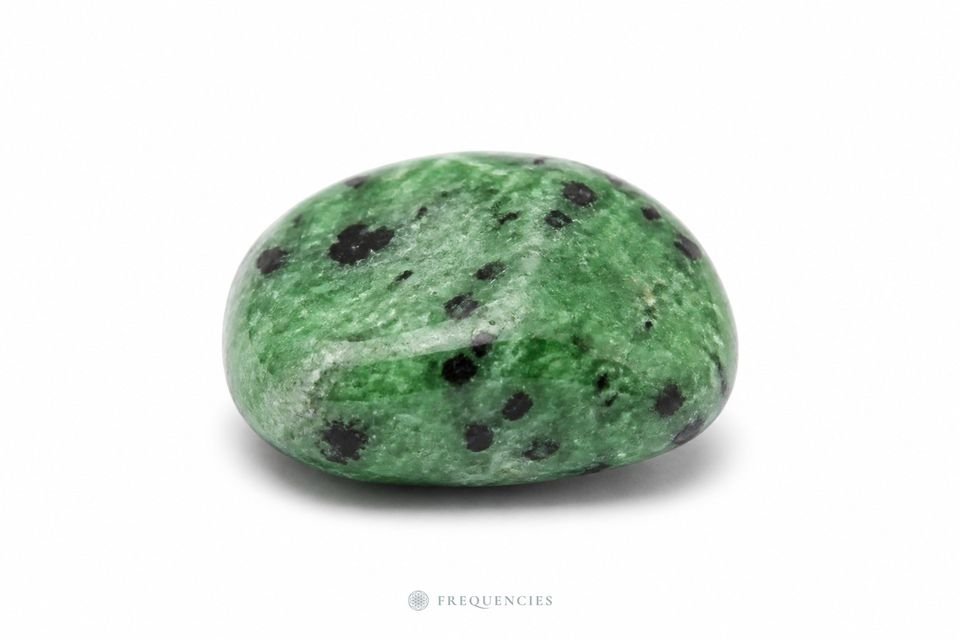
Zoisite
A green, pink or blue-violet silicate mineral, traditionally associated with development, renewal and openness.
Zoisite is a calcium and aluminium silicate mineral in green, pink or blue-violet with a hardness of 6 to 7 on the Mohs scale, named after the Slovenian naturalist Žiga Zois. The blue-violet variety is tanzanite, and the pink one is thulite. The main deposit is in Tanzania. In the crystal community, zoisite is traditionally associated with development, renewal and openness.
Zoisite in our shop
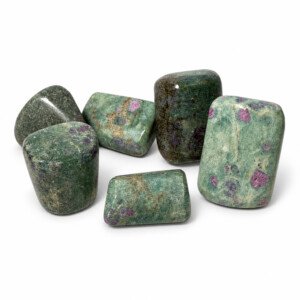
Exhibit label
Mohs hardness scale
Moderately hard: durable in everyday wear, but it can be scratched by harder stones. Store it separately.
Care
Water
A brief rinse in lukewarm water, then wipe dry.
Sun
May be kept in a bright place.
Storage
Avoid: prolonged heat, harsh cleaning agents, strong knocks.
Note. If the stone is porous, dyed or has a softer surface, it is safer to choose dry cleansing methods.
In the crystal community, the following are used for cleansing: a brief rinse under running water, the presence of selenite, sound vibrations, moonlight.
Traditional meaning
This is crystal tradition and symbolism, not a scientific or medical claim. The chakras, signs and elements match our product pages.
Chakras
Zoisite is traditionally associated with the heart and crown chakras, and it symbolises openness.
Zodiac signs
In traditional crystal astrology zoisite is associated with Gemini, as well as with people who value openness and inner balance.
Element
The earth element in crystal traditions symbolises openness and balance, which the green tones of zoisite recall.
The traditional meaning of crystals has not been medically proven and does not replace the advice of a professional.
Interesting facts
- Zoisite is named after the Slovenian naturalist and patron of science Žiga (Sigmund) Zois; the name was given in 1805 from specimens from the Saualpe in Carinthia, Austria.
- Tanzanite is the best-known blue-violet variety of zoisite.
- The green zoisite with rubies often found in shops is a rock called anyolite, or ruby in zoisite.
How to use it
- Wear it every day as a symbol of development and openness
- Keep it close during meditation or quiet moments
- Place it in your work or relaxation area
- Choose it as a gift with symbolic meaning
Pairs well with
 Clear Quartz
 Selenite
 Rose Quartz
 Black Tourmaline
Frequently asked questions
What is zoisite?
Zoisite is a calcium aluminium silicate mineral found in green, pink and blue-violet colours. It is named after the Slovenian naturalist Žiga (Sigmund) Zois, and the name was given in 1805.
Are zoisite and tanzanite the same thing?
Not quite. Tanzanite is the transparent blue-violet variety of zoisite, but not every zoisite is tanzanite: the pink variety is called thulite, and green zoisite is the most common in shops.
What is ruby in zoisite?
It is a rock also called anyolite: green zoisite with red ruby crystals and often black hornblende too. It is mined in the Longido area of northern Tanzania, and the ruby in it is opaque, so the rock is used for cabochons and decor.
What does zoisite symbolise?
Zoisite symbolises development, renewal and openness. In the crystal community it is associated with the heart and crown chakras, the earth element and the sign of Gemini.
May zoisite be put in water?
Yes, briefly. Zoisite can be rinsed or wiped with a damp cloth and then dried, just do not use harsh cleaning agents and do not soak it for long.
May zoisite be kept in the sun?
Yes, a short time in the sun does zoisite no harm. Prolonged heating is, however, not recommended, so do not leave it on a sun-baked windowsill or near a heater.
Where is zoisite mined?
Mainly in Tanzania, as well as in Kenya and Austria, where the specimens from which the mineral was described were found in the Saualpe mountains in Carinthia. Zoisite is not especially rare, but its variety tanzanite is.