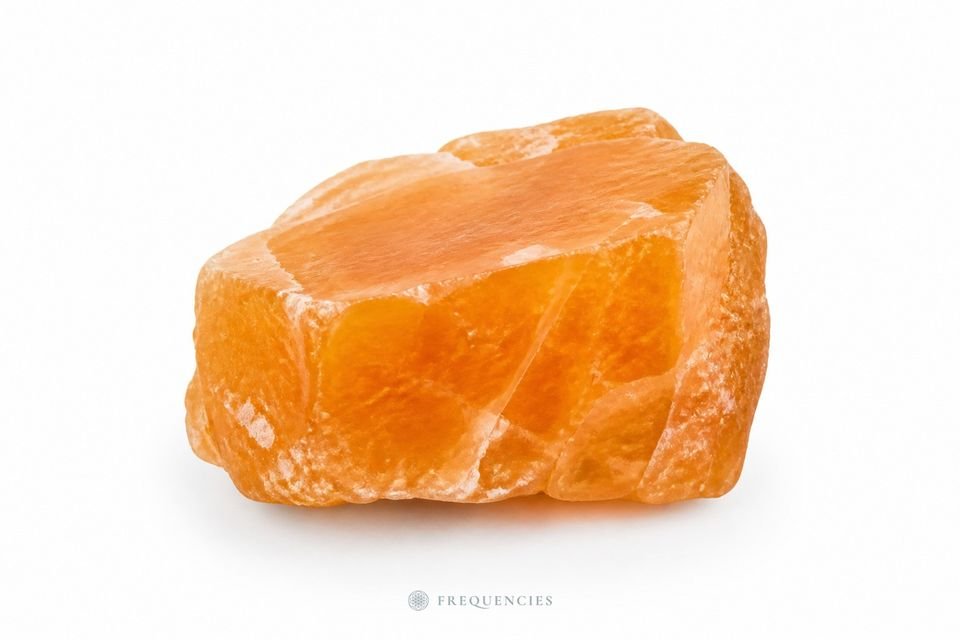
Orange Calcite
Orange Calcite is a stone traditionally associated with joy, flow and vitality.
Orange Calcite is a warm orange to honey-orange variety of calcium carbonate (CaCO3) with a hardness of 3 on the Mohs scale, so even a steel knife can scratch it. Calcite is one of the most common minerals, and the main deposit of orange calcite is in Mexico. In the crystal community, orange calcite is seen as a symbol of joy, flow and vitality.
Orange Calcite in our shop
Exhibit label
Mohs hardness scale
A soft stone: it can be scratched by glass and steel. Store it separately and clean it with a soft cloth.
Care
Water
Water can damage the surface or colour. Clean with a dry, soft cloth.
Sun
Prolonged direct sunlight can affect the colour, surface or structure
Storage
Avoid: prolonged direct sunlight, acids (vinegar, lemon juice) and harsh cleaning agents, strong knocks.
Note. Soft and sensitive to scratches.
In the crystal community, the following are used for cleansing: sage or palo santo smoke, the presence of selenite, sound vibrations, moonlight.
Traditional meaning
This is crystal tradition and symbolism, not a scientific or medical claim. The chakras, signs and elements match our product pages.
Chakras
Orange Calcite is traditionally associated with the sacral chakra and the solar plexus chakra, as well as with vitality.
Zodiac signs
In traditional crystal astrology, Orange Calcite is often associated with people who value vitality and inner balance.
Element
In crystal traditions, the element of fire symbolises vitality and a balanced character.
The traditional meaning of crystals has not been medically proven and does not replace the advice of a professional.
Interesting facts
- Calcite is the reference mineral for hardness 3 on the Mohs hardness scale.
- Calcite is calcium carbonate (CaCO3): dilute acid produces bubbles on it, and acids damage a polished surface.
- Massive calcite is sometimes dyed or impregnated with wax or resin, so a very vivid tone can be a sign of treatment.
How to use it
- Wear it gently as jewellery traditionally associated with joy and flow
- Keep it close during meditation or quiet moments
- Place it in your work or relaxation area
- Choose it as a gift with symbolic meaning
Pairs well with
 Clear Quartz
 Selenite
 Rose Quartz
 Black Tourmaline
Frequently asked questions
What is Orange Calcite?
Orange Calcite is calcium carbonate (CaCO3) in a warm orange to honey-orange tone. Calcite is one of the most common minerals, so Orange Calcite is not rare and is readily available; an important source is Mexico.
What does Orange Calcite symbolise?
In the crystal community, Orange Calcite is regarded as a symbol of joy, flow and vitality. It is associated with the sacral and solar plexus chakras, the zodiac signs Leo and Cancer, and the element of fire.
Is Orange Calcite the same as citrine?
No. Citrine is a quartz with a hardness of 7, whereas Orange Calcite is a carbonate with a hardness of only 3 on the Mohs scale, so even a steel knife scratches it. They are completely different minerals that merely have a similar colour.
How can you recognise genuine Orange Calcite?
Calcite is recognised by its low hardness: a steel knife scratches it. A specialist also tests it with dilute acid, which produces bubbles on calcite, although the acid damages the surface. A very vivid, uniform tone or a waxy lustre can indicate dyeing or impregnation with wax.
Can Orange Calcite be put in water?
No, soaking it is not recommended. Calcite is soft and sensitive, and acids, including vinegar and lemon juice, damage its surface. If the stone needs to be cleaned, wipe it with a dry or slightly damp cloth and dry it straight away.
Does Orange Calcite fade in the sun?
It can, so it is better not to keep it in direct sunlight for long: strong light and heat can affect the colour and the surface. Store it in a shaded place, apart from harder stones so that it does not get scratched.