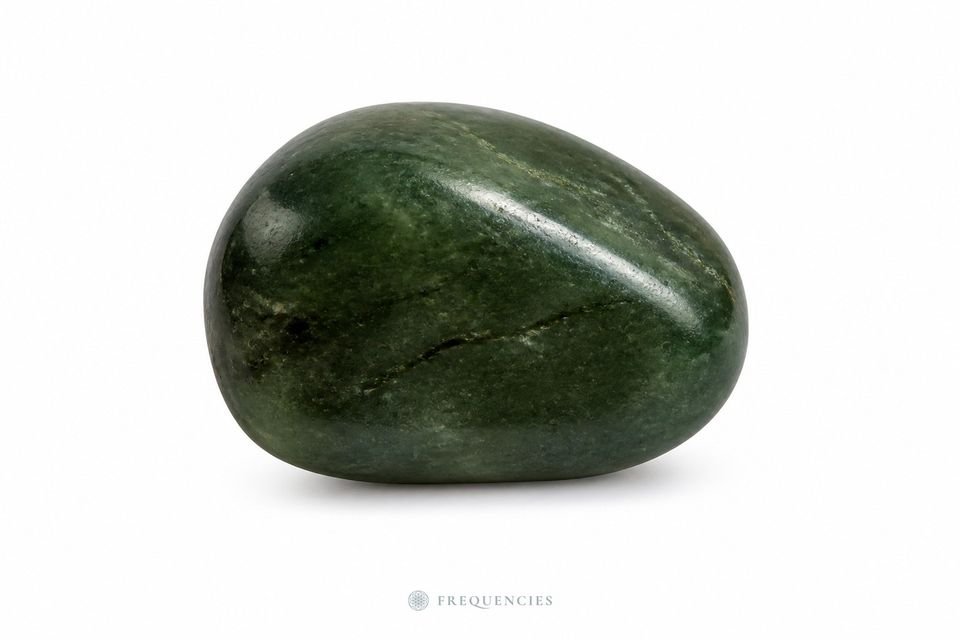
Nephrite Jade
Nephrite Jade is a stone traditionally associated with harmony, symbols of prosperity and calm self-sufficiency.
Nephrite is one of the two minerals called jade: an amphibole with a dense, interlocked fibrous structure, usually in green or creamy shades. Its hardness is 6 to 6.5 on the Mohs scale, and the main deposit is in Canada. The other jade, jadeite, is a pyroxene. In the crystal community, nephrite is seen as a symbol of harmony and prosperity.
Exhibit label
Mohs hardness scale
Moderately hard: durable in everyday wear, but it can be scratched by harder stones. Store it separately.
Care
Water
A brief rinse in lukewarm water, then wipe dry.
Sun
May be kept in a bright place.
Storage
Avoid: prolonged heat, harsh cleaning agents, strong knocks.
Note. If the stone is porous, coloured or has a softer surface, dry cleansing is the safer choice.
In the crystal community, the following are used for cleansing: a brief rinse under running water, the presence of selenite, sound vibrations, moonlight.
Traditional meaning
This is crystal tradition and symbolism, not a scientific or medical claim. The chakras, signs and elements match our product pages.
Chakras
Nephrite Jade is traditionally associated with the heart chakra and calm self-sufficiency.
Zodiac signs
In traditional crystal astrology, Nephrite Jade is often associated with people who value calm self-sufficiency and inner balance.
Element
The element of earth traditionally gives this stone calm self-sufficiency and a balanced character.
The traditional meaning of crystals has not been medically proven and does not replace the advice of a professional.
Interesting facts
- The word "jade" denotes two different minerals: nephrite (an amphibole) and jadeite (a pyroxene); they were officially distinguished only in 1863.
- In China, the tradition of carving jade is more than 3,000 years old.
- In New Zealand, nephrite is called pounamu in the Māori language.
How to use it
- Wear it every day as jewellery traditionally associated with harmony and symbols of prosperity
Pairs well with
 Clear Quartz
 Selenite
 Rose Quartz
 Black Tourmaline
Frequently asked questions
What kind of stone is nephrite?
Nephrite is one of the two minerals called jade. It is an amphibole with a dense, interlocking fibrous structure, usually in green, creamy or white tones. The name comes from the Latin lapis nephriticus, or "kidney stone", and the same Greek word nephros (kidney) gives us the medical term nephritis, for inflammation of the kidney.
How does nephrite differ from jadeite?
They are two different minerals: nephrite is an amphibole, whereas jadeite is a pyroxene, and they were officially distinguished only in 1863. Nephrite is more common, usually darker and less vivid, whereas the vivid green "imperial jade" is only jadeite, and it is also more expensive.
What does nephrite symbolise?
Nephrite symbolises harmony, prosperity and calm self-sufficiency. In the crystal community it is associated with the heart chakra, with Taurus, Libra and Gemini, and with the element of earth. In China, the tradition of carving jade is more than 3,000 years old.
How can you recognise genuine nephrite?
Serpentine, dyed calcite, other green stones and glass are often sold as nephrite. Glass is usually lighter and may contain tiny bubbles. A gemmologist, who measures the density and refractive index, can give a reliable answer.
Is nephrite dyed or treated?
Less often than jadeite. Bleaching with acid and impregnation with polymer (type B jade) or dyeing (type C) most often apply to jadeite. The GIA notes that jade can also be dyed, impregnated, coated or heated, so it is worth asking the seller about an unusually vivid tone.
Can nephrite be washed in water?
Yes. Nephrite can be cleaned safely in warm water with a mild detergent and a soft brush. Use ultrasonic and steam cleaners only if you know the stone has not been treated, because they can damage impregnated stones.
How durable is nephrite?
Very durable. The GIA gives the hardness of nephrite as 6 to 6.5 on the Mohs scale (6.5 to 7 for jadeite), and the interlocking fibres make nephrite hard to break, which is why tools, jewellery and fine small sculptures were made from it for thousands of years. Scratches are still possible, so for a ring choose a setting that protects the edges of the stone.
Where is nephrite found?
The main modern sources are Canada, especially British Columbia, as well as Russia and China. In New Zealand, nephrite is called pounamu in the Māori language. It is a treasure of Māori culture, and since 1997 natural pounamu on the lands of the South Island tribe Ngāi Tahu has belonged to that tribe.