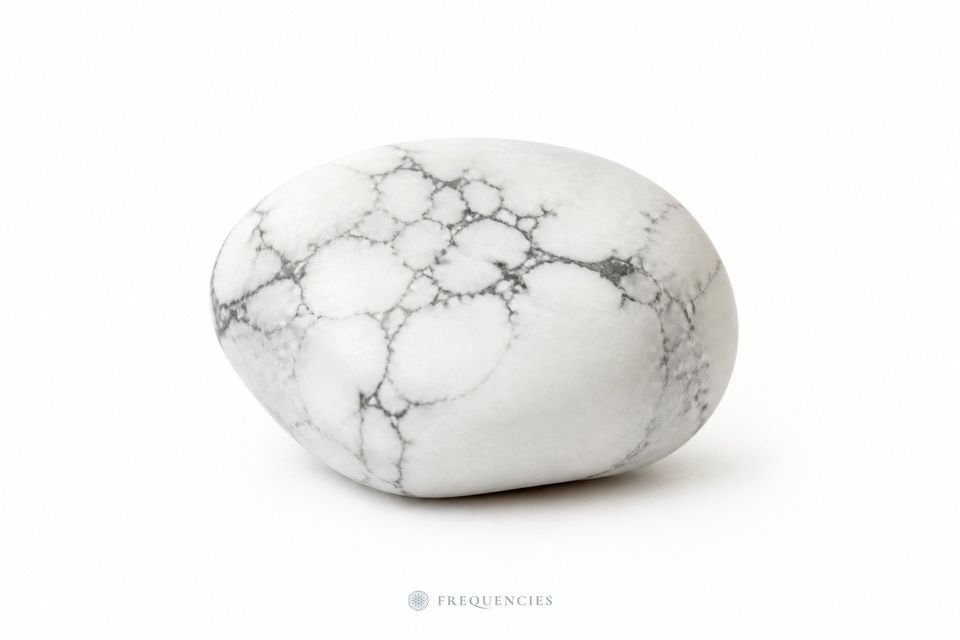
Magnesite
Magnesite is a stone traditionally associated with calm and relaxation.
Magnesite is magnesium carbonate (MgCO3), a mineral of the calcite group with a hardness of 3.5 to 4.5 on the Mohs scale, white or creamy in nature with dark veins. Its porous structure is often dyed turquoise blue, and on the market it is confused with howlite. The main deposit is in China. In the crystal community, magnesite is traditionally associated with peace and relaxation.
Exhibit label
Mohs hardness scale
A soft stone: it can be scratched by glass and steel. Store it separately and clean it with a soft cloth.
Care
Water
Water can damage the surface or colour. Clean with a dry, soft cloth.
Sun
Prolonged direct sunlight can affect the colour, surface or structure
Storage
Avoid: prolonged direct sunlight, harsh cleaning agents, strong knocks.
Note. A porous mineral; it is better not to keep it in water for long.
In the crystal community, the following are used for cleansing: sage or palo santo smoke, the presence of selenite, sound vibrations, moonlight.
Traditional meaning
This is crystal tradition and symbolism, not a scientific or medical claim. The chakras, signs and elements match our product pages.
Chakras
Magnesite is traditionally associated with the Crown Chakra and Heart Chakra, and with relaxation.
Zodiac signs
In traditional crystal astrology, magnesite is often associated with people who value calm and inner balance.
Element
The Earth element is traditionally said to give this stone a calm, balanced character.
The traditional meaning of crystals has not been medically proven and does not replace the advice of a professional.
Interesting facts
- Heating magnesite yields magnesium oxide, which is used in refractory materials in the steel industry and in furnace linings.
- White, porous magnesite takes up dyes readily, so blue-dyed magnesite has long been used as a turquoise imitation.
- The world's largest producer of magnesite is China.
How to use it
- Wear it gently as jewellery traditionally associated with calm and relaxation
Pairs well with
 Clear Quartz
 Selenite
 Rose Quartz
 Black Tourmaline
Frequently asked questions
What is magnesite?
Magnesite is magnesium carbonate (MgCO3), a mineral of the calcite group. Natural magnesite is white, creamy or greyish with dark veining, and heating it yields magnesium oxide, which is used in refractory materials in the steel industry.
Is magnesite turquoise?
No. Blue or turquoise-coloured magnesite is always dyed: the white, porous mineral takes up dyes readily, so it has long been used as an imitation of turquoise and also of lapis lazuli. Real turquoise is a different mineral, a copper aluminium phosphate.
How does magnesite differ from howlite?
They are different minerals: magnesite is magnesium carbonate, whereas howlite is calcium borosilicate. In appearance both are white with dark veining, so on the market many "howlite" beads are in fact magnesite. Magnesite is slightly harder (3.5 to 4.5 on the Mohs scale) than howlite (3 to 3.5).
What does magnesite symbolise?
In the crystal community, magnesite is associated with relaxation and inner peace. Traditionally it corresponds to the Crown and Heart Chakras, the Earth element, and the signs of Capricorn and Virgo.
May magnesite be put in water?
Better not. Magnesite is a porous mineral, so do not soak it, especially if it is dyed. Clean it with a dry or slightly damp cloth and do not use harsh cleaning agents.
May magnesite be kept in the sun?
Better not for long periods. Direct sunlight can affect the surface and colour of magnesite, especially if the stone is dyed, so store it in the shade, away from a sunny windowsill.