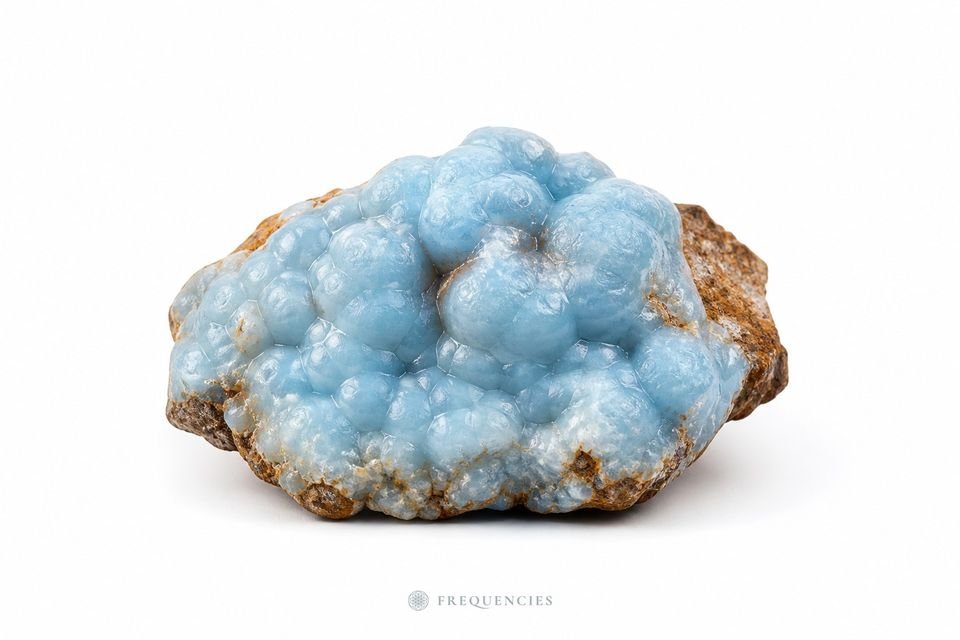
Hemimorphite
Hemimorphite is a sky-blue zinc mineral, traditionally associated with warm communication and self-expression.
Hemimorphite is a zinc silicate mineral that forms in the oxidation zone of zinc deposits, and its hardness is 4.5 to 5 on the Mohs scale. The name refers to hemimorphism: the two ends of the crystal have different shapes. Blue specimens are often botryoidal and resemble larimar. In the crystal community, hemimorphite is traditionally associated with heartfelt communication and self-expression.
Exhibit label
Mohs hardness scale
A soft stone: it can be scratched by glass and steel. Store it separately and clean it with a soft cloth.
Care
Water
Water can damage the surface or colour. Clean with a dry, soft cloth.
Sun
Prolonged sun and heat can affect the colour and filling of dyed or resin-stabilised specimens
Storage
Avoid: soaking in water, acids and household chemicals, ultrasonic and steam cleaning, heat.
Note. Clean with a dry or slightly damp cloth and dry immediately. If blue colour comes off on a damp cotton pad, the stone is most likely dyed.
In the crystal community, the following are used for cleansing: the presence of selenite, sound vibrations, moonlight, sage or palo santo smoke.
Traditional meaning
This is crystal tradition and symbolism, not a scientific or medical claim. The chakras, signs and elements match our product pages.
Chakras
Hemimorphite is traditionally associated with the throat and heart chakras, which in crystal traditions symbolise warm communication and self-expression.
Zodiac signs
In crystal astrology, hemimorphite is attributed to Libra, a sign associated with balance, beauty and the art of relationships.
Element
The Air element traditionally symbolises lightness, communication and clear thoughts, reflected in the pale, sky-blue tones of hemimorphite.
The traditional meaning of crystals has not been medically proven and does not replace the advice of a professional.
Interesting facts
- The name refers to the hemimorphism of the crystals: the two ends of the crystal have different forms.
- Hemimorphite is distinctly pyroelectric: as the temperature changes, its crystals acquire an electric charge.
- It forms in the oxidation zone of zinc deposits together with smithsonite and other zinc minerals.
How to use it
- Place it on a shelf or in a display case as a soft blue accent
- Use it in meditation as a symbol of the throat and heart chakras
- Choose it as a gift for those born under the sign of Libra
- Store it separately from harder stones so that the surface does not get scratched
Pairs well with
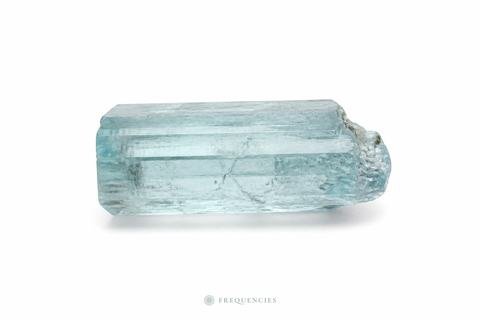 Aquamarine
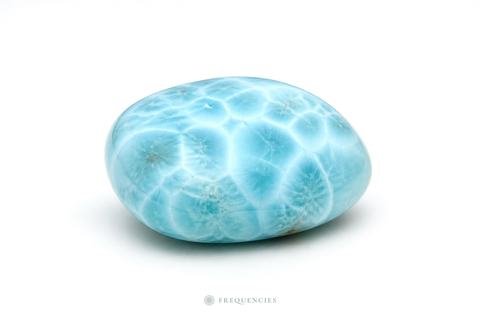 Larimar
 Rose Quartz
 Clear Quartz
Frequently asked questions
What is hemimorphite?
Hemimorphite is a zinc silicate mineral that forms in the oxidation zone of zinc deposits together with smithsonite. The name refers to the hemimorphism of the crystals: the two ends of the crystal have different forms.
What does hemimorphite symbolise?
In the crystal community, hemimorphite is associated with warm communication and self-expression. It is linked to the throat and heart chakras, the Air element and the sign of Libra.
Is hemimorphite larimar?
No. Blue, botryoidal hemimorphite can resemble larimar, but larimar is a blue pectolite from the Dominican Republic, whereas hemimorphite is a zinc silicate.
How can you recognise dyed hemimorphite?
By the colour. In dyed hemimorphite the tone is unusually even, the dye collects in cracks, blue traces are left on a damp cotton pad, or the stone fades in water. On the market you often find white hemimorphite or smithsonite that has been given a blue tone with dye.
Can hemimorphite be put in water?
No. Clean it with a dry or slightly damp cloth and dry immediately. Avoid acids and household chemicals. Do not use ultrasonic or steam cleaning.
Can hemimorphite be kept in the sun?
Better not for long periods. Prolonged sun and heat can affect the colour and filling of dyed or resin-stabilised specimens, so store it in the shade.
How hard is hemimorphite?
Hemimorphite has a hardness of 4.5 to 5 on the Mohs scale, so it is softer than quartz and easily scratched. It is also distinctly pyroelectric: as the temperature changes, its crystals acquire an electric charge.
Read more
Hemimorphite: Properties, Significance, and How to Use It in Daily Life