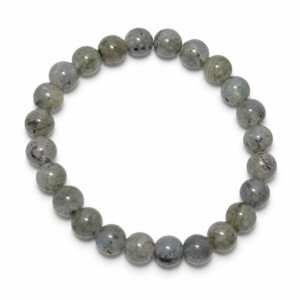
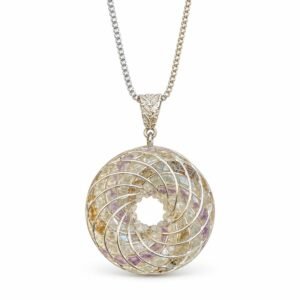
Labradorite is named after the coast of Labrador in Canada.
Around 1770, missionaries of the Moravian Church found boulders of this stone in Labrador. The first specimens came from the Nain area and Paul Island, which is still a type locality for labradorite. The name of the stone is a reminder of this Canadian coast.
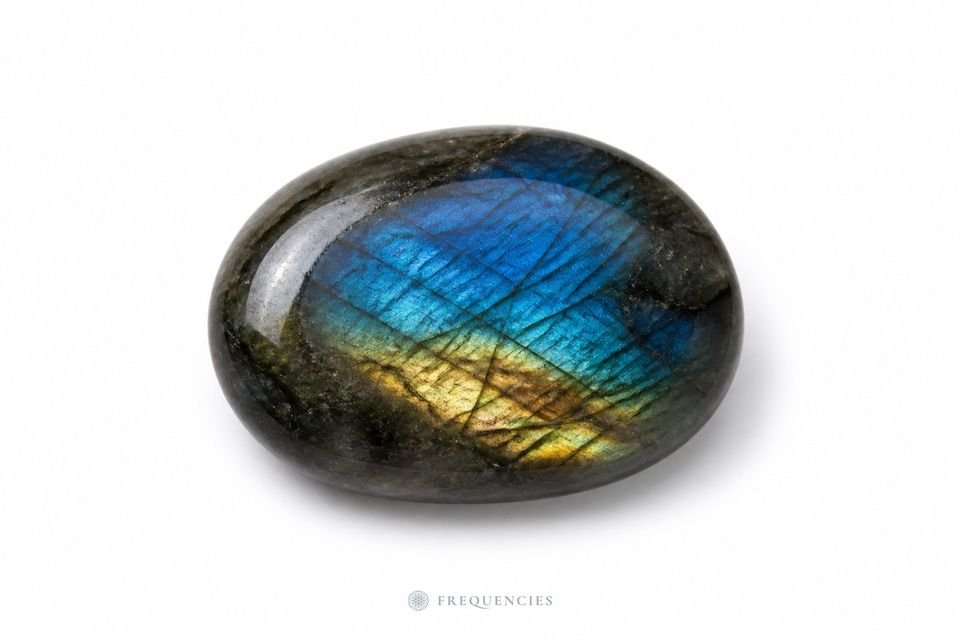
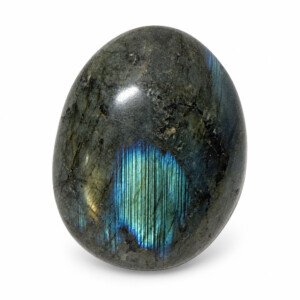
The shimmer of labradorite is produced by the interference of light inside the stone.
Labradorite contains very thin layers of slightly different composition that reflect light and make it interfere, as in a soap bubble. The colour depends on the thickness of the layers, and the effect is visible when the spacing between them is roughly 128 to 252 nanometres. This phenomenon is called labradorescence, and it was named by the Danish mineralogist Ove Balthasar Bøggild.

 Clear Quartz
 Selenite
 Rose Quartz
 Black Tourmaline