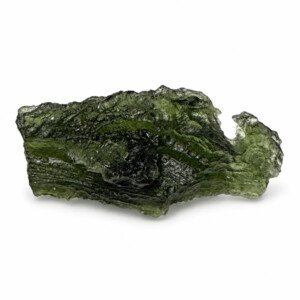
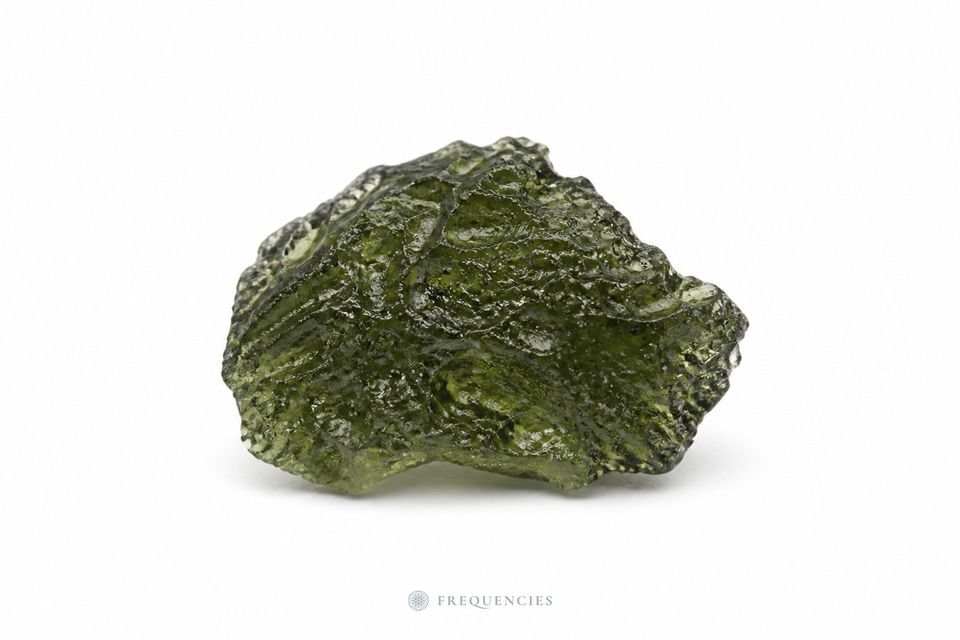
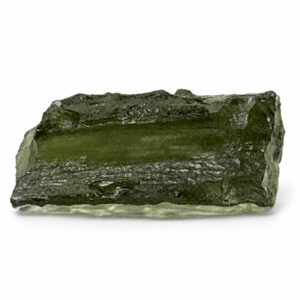
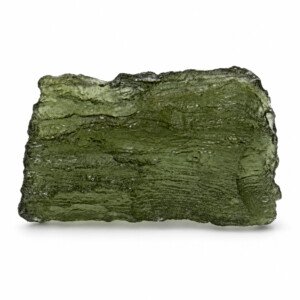
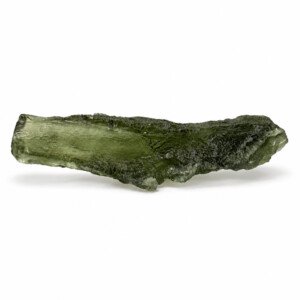
Moldavite was created by the impact of a giant meteorite almost 15 million years ago.
About 14.8 million years ago, a meteorite struck what is now Bavaria in Germany and formed the Nördlingen Ries crater, about 24 km wide. The rocks melted by the heat of the impact were thrown into the air and froze into green natural glass, whose furthest known deposits are in Poland, about 475 km from the crater. Moldavite is therefore not a piece of a meteorite, but Earth rock melted by the impact.
The name comes from the German name of the Vltava river.
In 1788, Josef Mayer, a professor at the University of Prague, was the first to describe scientifically the green stones from Týn nad Vltavou, calling them "chrysolites". In 1836 they were named moldavites, after the German name of the Vltava river, Moldau. Before their natural origin was understood, some people regarded them as slag from Bohemian glassworks.
People of the Stone Age made tools from moldavite.
In the territory of today's Czech Republic and Austria, prehistoric people split moldavite into sharp tools. Some of these finds are associated with the Aurignacian culture, which existed about 43,000 to 26,000 years ago. Tektites, including moldavite, have been used since prehistoric times for jewellery and rituals.
Apollo astronauts trained in the crater where moldavite formed.
The town of Nördlingen lies right inside the Ries crater, and its buildings are made of suevite, a rock formed in the meteorite impact. In August 1970, the Apollo 14 astronauts Alan Shepard and Edgar Mitchell trained here to become familiar with impact rocks before their flight to the Moon. The Apollo 17 crew later studied in the crater as well.
 Clear Quartz
 Selenite
 Rose Quartz
 Black Tourmaline